A single phone line
One line for paper wasps, hornets and yellow jackets.
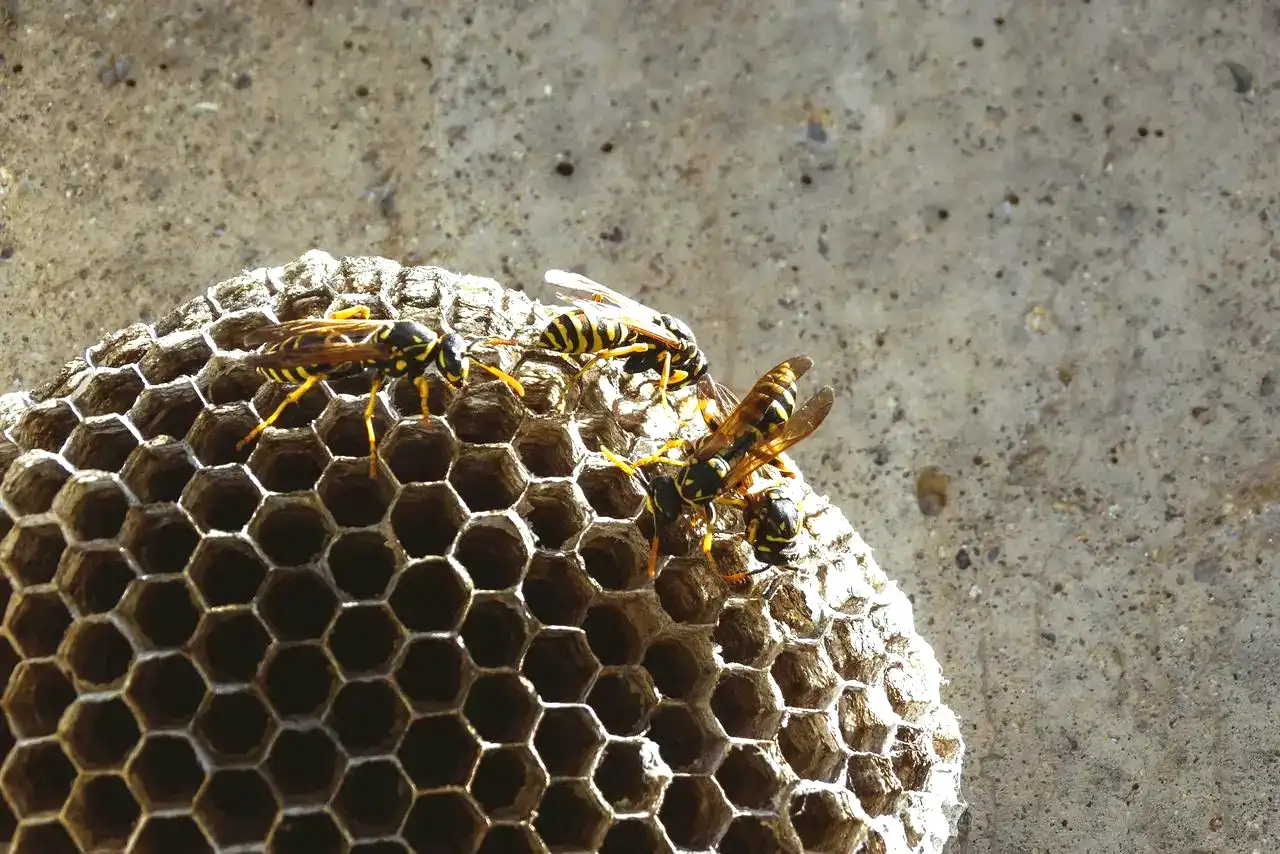
Wasp nest removal in Baywood Oaks begins with two questions: which insect is it, and where exactly is it nesting? Baywood Oaks is a subdivision in Harris County Appraisal District parcel data for ZIP 77505, a ZIP the 2020 Census check places 98.4 percent inside Pasadena. Calls from its streets go to an independent local provider, who will normally work out from a safe distance whether it is a paper wasp, yellowjacket or baldfaced hornet (honey bees are referred to a beekeeper) and then explain the treatment and removal. Ask up front how long the visit takes, when it can be scheduled and whether a second visit is planned.
One line for paper wasps, hornets and yellow jackets.
Ask the provider to name the insect before treatment.
Your call goes to a provider serving your ZIP code.
Find the company on TDA’s current-license list.
Wasp nest removal in Baywood Oaks works when the plan matches the actual insect and the actual spot. Baywood Oaks is a subdivision on the Harris County Appraisal District's parcel rolls in ZIP 77505, and the 2020 Census check puts 98.4 percent of 77505 inside Pasadena city limits. Citywide, the median home was built in 1977, 56.7 percent of housing units were built before 1980, and renters occupy 45.5 percent of homes (ACS 2024). That means plenty of mature rooflines, soffits and fences, and plenty of nests found by people who do not own the building. The three usual suspects nest in different places. Paper wasps pick eaves, garages, sheds and shrubbery. Yellowjackets mostly dig into the ground but can also take over a wall void, and baldfaced hornets hang closed paper nests in trees and shrubs. Expect a provider to identify the insect, locate each entrance and look along nearby rooflines for a second nest before treating. Ask how they will know the colony is dead.

The right approach in Baywood Oaks depends on what built the nest and where it is. An open paper wasp comb under an eave is often treated and taken down on one visit. A yellowjacket colony behind siding may be treated at its entrance, then rechecked before anyone closes the gap. The five services below are the ones Pasadena providers commonly handle, and whoever takes your call should match the method to the insect, the spot and the colony's size. Got a big gray nest in a tree? Read the hornet card first.
In Baywood Oaks, the provider's first step is identifying the insect, which may be a paper wasp, yellowjacket, baldfaced hornet or honey bee. Then they map the nest: position, size and every entrance, whether it hangs from an eave, sits in a shed or hedge, opens from the soil or hides in a wall. This line does not take honey bee calls; those belong with a beekeeper from the Texas Apiary Inspection Service list for Harris County. Ask for a brief written summary of the findings and the plan.
View service →02Texas has only one "hornet", the baldfaced hornet, and the Texas Apiary Inspection Service points out that it is really a yellowjacket. It builds a large, closed paper nest hung from a tree, a shrub or an eave, often well above head height. AgriLife entomologist Wizzie Brown advises that hornets and yellowjackets in established colonies be handled by professionals. Find out how the provider plans to reach a nest that high and when it will be safe to bring it down. Until then, keep children, pets and anyone mowing well away from the tree.
View service →03Most yellowjacket colonies live underground in lawns, beds and banks, but the species can also nest in the open or inside wall voids. Treatment usually goes in at the nest entrance, and the provider checks again before the nest is dug out or removed. AgriLife's fact sheet says a wall-void entrance generally should not be sealed until the colony has been eliminated. Ask what goes into the nest and how long to keep clear.
View service →04A nest at an apartment complex, rental house or HOA property in Pasadena rarely concerns only the tenant who saw it. Shared buildings are common: 30.5 percent of the city's housing units are in buildings with five or more units, and renters live in 45.5 percent of its homes. The tenant reports the nest to the manager, who arranges access to balconies, walkways and rooflines. A provider may look at nearby units' eaves as well. Ask who must be on site and how residents will hear about the visit.
View service →05A return visit answers two questions: is the colony dead, and has a new nest started? Paper wasp queens, according to Texas A&M AgriLife, often found colonies in the same general location as the previous season's nest. So the provider looks again at the treated spot and at the eaves, sheds and garages around it. Ask about timing, whether the visit is part of the original job, and what paperwork you receive.
View service →Most Baywood Oaks wasp calls begin on the phone. Expect the provider to ask what the insects look like, where they are flying, how far up the nest is and whether anybody in the house has had a bad reaction to a sting. On site, the first job is confirming the species from a safe distance and tracing every opening; a yellowjacket colony behind siding can come and go through more than one gap. Early morning and evening are common choices because most of the colony is inside then, but the schedule belongs to the provider. Open combs under eaves or carports are usually treated first and pulled down after they go quiet. Colonies in the ground or a wall are generally treated through the entrance and rechecked, with the hole left unsealed until no wasps remain. Bring children and pets inside and close windows on that side of the house while the work goes on. TDA's Structural Pest Control Service licenses pest control businesses, certified applicators and technicians and posts current-license lists. Ask for a dated note listing what was applied and where, and file it with your home records.
When homes or apartments share a roofline or a walkway, a comb above one door is within a few steps of several others. In Pasadena, 35.6 percent of housing units are in buildings with two or more units (ACS 2024), so shared eaves are a common setting. Treating the single reported comb can miss another one a few feet along the same eave. Ask the provider to walk the full roofline, and settle in advance who grants access to the whole building.
The Texas Apiary Inspection Service describes yellowjacket nests as mostly underground, and a typical one shows nothing above the surface but a small hole. People find them by accident: a mower pass, a trimmer along the fence, a child chasing a ball. Unlike honey bees, yellowjackets have no hair and carry no pollen. Flag the hole from well back and keep people and pets away. AgriLife says established colonies belong with professionals, so have a provider treat the nest and check the yard for any other entrances.
Eaves are only the start. The Texas Apiary Inspection Service says paper wasps also build in garages, sheds and shrubbery, and their combs can reach 6 to 8 inches across. A nest behind stacked boxes, in the frame of a shed door or deep in a hedge is easy to brush against with no warning. You may be asked to make a clear path to the nest or hold off on yard work until it is treated. Before the visit, ask what you should move and what you should leave exactly where it is.
Whoever treats a wasp nest at a Baywood Oaks home should appear on the Texas Department of Agriculture's current-license lists for businesses, applicators and technicians. Write down the license number.
Ask, before work starts, which products will be used close to doors, play areas, pools and vegetable beds, and how many hours people and pets should stay off those spots.
This line does not take honey bee work. The Texas Apiary Inspection Service keeps a Harris County list of registered beekeepers who remove bees; the list is not an endorsement. Do not spray chemicals into a hive, and keep people back while you wait.
Nests reported from Baywood Oaks are the same types found across Pasadena: combs on eaves, yellowjackets in the ground, colonies in walls and nests on shared buildings. Paper wasps start in spring and yellowjackets peak by August or September. Most yellowjacket nests die after the first hard frost, but in a mild Gulf Coast winter a nest can carry on. The four cards below cover each problem and what to ask about it.
Paper wasp queens wait out winter in sheltered corners, and in spring each one starts a colony, often, as Texas A&M AgriLife notes, in the same general location as the previous season's nest. That is why a single porch ceiling, carport beam or shed corner can host a comb every year. Knocking a comb down while wasps are on it just launches them. The provider normally treats the live nest, takes it down once it is quiet and looks over the rest of the roofline. Ask if an early-spring check would help at your house, and which spots to keep an eye on so the next comb is found while small.
Store-bought sprays seldom reach a colony inside a wall or deep underground, and spraying up close can send angry wasps straight at you. Blocking the hole is the other common mistake. Texas A&M AgriLife says a wall-void entrance generally should not be sealed until the colony has been eliminated, since trapped wasps may find another exit, possibly indoors. AgriLife's fact sheet adds: if you have any doubt about your ability to safely control a wasp nest, call a professional. A provider typically locates every opening, treats the colony and then decides when the nest can come out or the opening be sealed. Find out how they will confirm the colony is dead and what to avoid meanwhile.
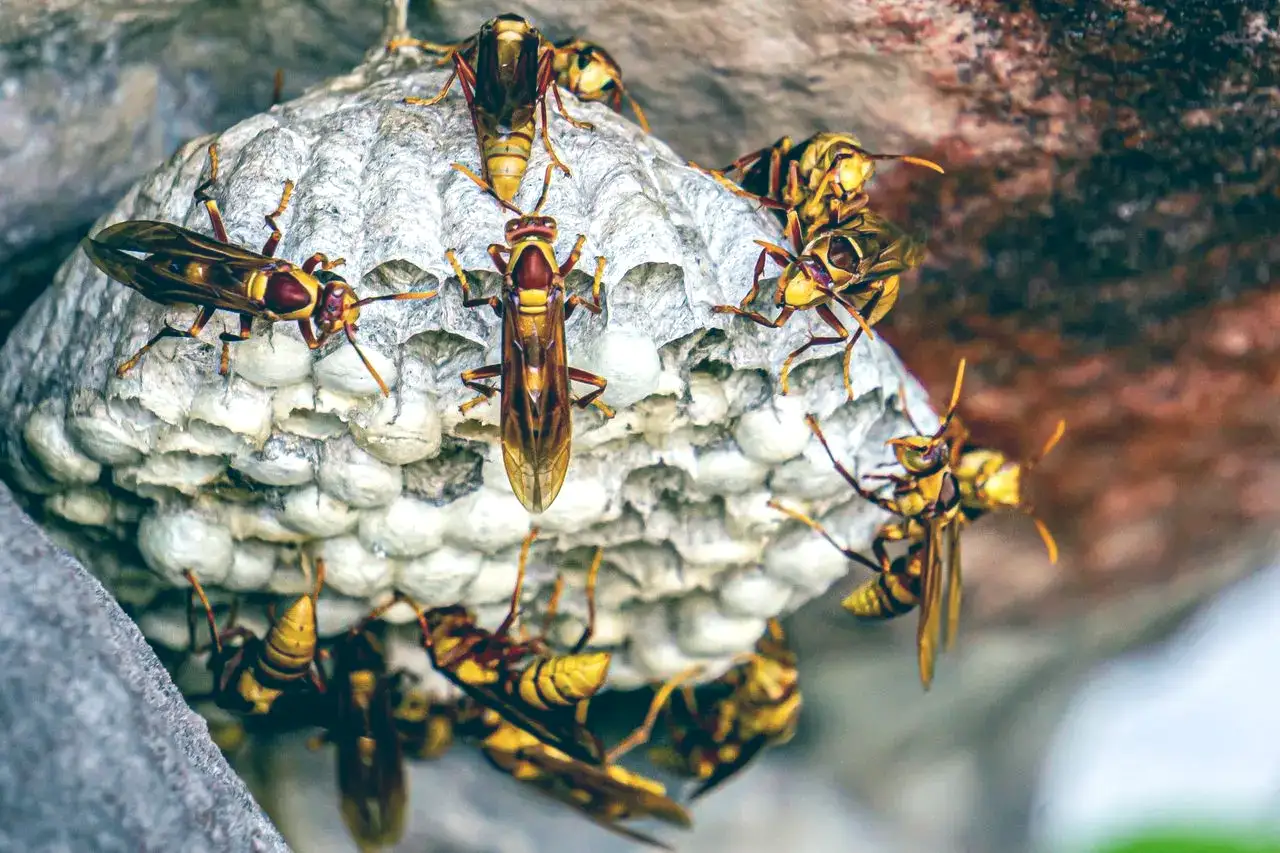
A baldfaced hornet colony lives in an enclosed gray paper nest, and the Texas Apiary Inspection Service notes these "hornets" are actually yellowjackets. The nests hang in trees and shrubs and sometimes under eaves, and many are found only when someone starts trimming nearby. Leave it completely alone: no pruning beside it, no rocks, no spray, because a disturbed colony can sting repeatedly. Texas A&M AgriLife leaves established hornet colonies to professionals. The provider will explain how a high nest is reached and when the empty nest can come down. Until then, tell anyone mowing, trimming or playing nearby to keep their distance.
Renters live in 45.5 percent of Pasadena's occupied homes, so the person who finds a nest is often not the person who owns the building. No Pasadena permit for wasp nest removal was found, and this site offers no legal advice and no view on who is responsible. What helps is deciding quickly who will phone. Tenants can text or email the landlord or manager, attach a photo taken from a safe distance and say exactly where the nest is. Managers and HOAs normally handle access to balconies, walkways and roof edges. Once the work is done, the provider's written note (insect, location, products, date and license details) should go to the owner, the manager and the tenant alike.
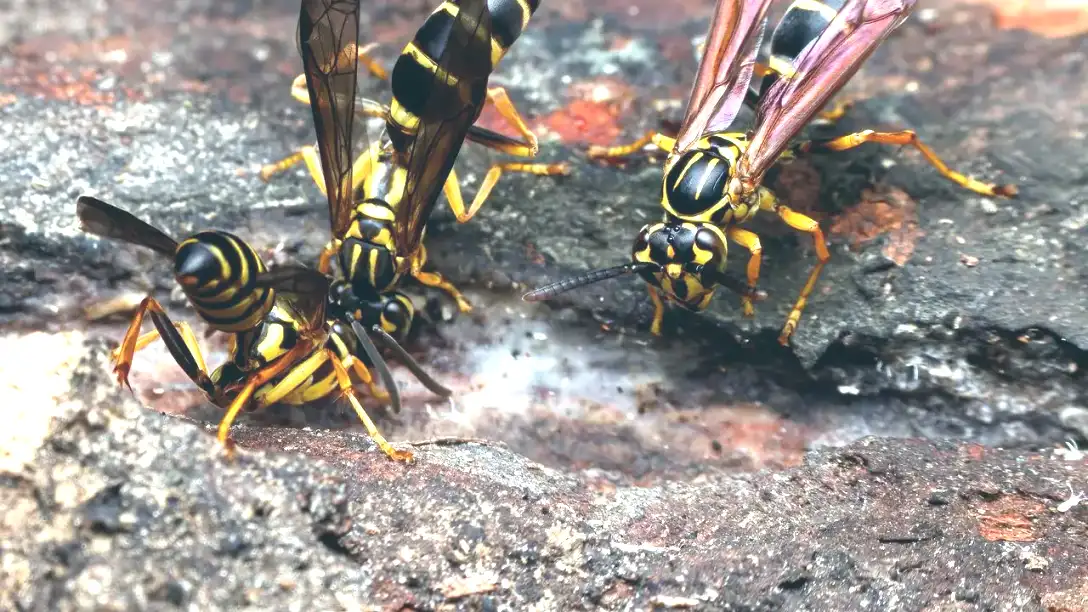
This site publishes no figures. The provider sets the cost of wasp nest removal in Baywood Oaks once the nest has been seen, and the main factors are easy to list: the insect, the colony's size, the nest's height or how well it is hidden, and how many nests the property has. A wall colony may need a second trip before its entrance is closed, while a hornet nest near the top of a tree can call for extra gear. When a figure is offered, ask exactly what it includes, for example taking down the nest, a return check and a look along nearby eaves, and how many days the offer holds. Say early in the call if the nest is beside a door, pool or play area, or if anyone in the household has a sting allergy.
A single young comb is a quicker job than a full-grown colony or a house with nests on three sides. Expect the provider to count the active nests and judge each one's size, then explain how that shapes the plan.
When a nest sits behind boxes in a garage or shed, or deep in a hedge, reaching it safely takes longer. You may be asked to clear a way in beforehand, and that can change the time on site, the plan and the cost.
Nests up at a second-story soffit, near the top of a tree or tucked inside a wall take longer and need more gear than one you could reach from the ground. A wall colony may also need a second visit before its opening is sealed. The provider can explain how reach and access affect timing and the plan.
Because this site never dispatches anyone, it has no landmarks to navigate by. The cards below collect what is useful for a wasp call from Baywood Oaks instead: its ZIP, other verified neighborhoods, citywide housing numbers, licensing, honey bee referrals and Houston Hobby Airport climate data. When you call, give the street address first, then mention pets in the yard, a locked gate or anyone with a sting allergy. If the nest is high, estimate the height and say whether it hangs from a tree, an eave or a fence.
Baywood Oaks addresses use ZIP 77505, and the 2020 Census check places 98.4 percent of that ZIP inside Pasadena city limits. A small slice lies outside the city, so lead with the full street address.
Renters occupy 45.5 percent of Pasadena's homes. If you rent, report the nest to your landlord or manager in writing first; owners can phone the line directly.
In Pasadena, 56.7 percent of housing units were built before 1980 and only 6.8 percent in 2010 or later. Older soffits, vents and trim are worth checking for wasps.
Tanglebriar is a Pasadena neighborhood in ZIP 77503, grouped with Bennett Estates in county appraisal data. Its residents use the same referral line during the same hours.
Burke Meadows is in the Pasadena part of 77504, listed with Parkland Village in county parcel data. Give the neighborhood name when you call.
The Texas Department of Agriculture's Structural Pest Control Service licenses pest control businesses, certified applicators and technicians and posts current-license lists. Look the provider up before work starts and keep the license number on file.
This line does not handle honey bees. For a swarm or hive, use the Texas Apiary Inspection Service's Harris County list of beekeepers who remove bees. Never spray a hive.
Houston Hobby Airport, the NWS climate site nearest Pasadena, averages 4.2 days a year at or below 32°F (1991–2020 normal); 2025 had 7. These are Hobby figures, not Pasadena readings.
Baywood Oaks appears in Harris County Appraisal District parcel data as a subdivision in ZIP 77505, inside Pasadena. Homes there are covered by this line, which passes each call to an independent provider.
Calls are connected for addresses in Baywood Oaks and across 77505, including Village Grove and Fairmont Estates, along with 77502, 77503, the Pasadena part of 77504 and the Pasadena part of 77506. Pasadena's median home dates from 1977, with 23.4 percent of units built before 1960 and 6.8 percent since 2010. Describing the nest's spot and height on the call lets the provider plan ladders and protective gear.
Baywood Oaks, recorded in county appraisal data as a 77505 subdivision, is the focus of this page. Expect the usual Pasadena pattern: paper wasp combs under eaves, carports and porch ceilings, and yellowjackets digging into lawns and beds. The provider's routine is to name the insect, track down the nest and each opening, treat the colony and take the nest down once it is dead and within reach. The line passes calls on during its hours, and the provider picks the day.
Village Grove appears by name in Harris County appraisal data, in 77505 alongside Baywood Oaks. The Texas Apiary Inspection Service lists garages, sheds and shrubbery as paper wasp nest sites in addition to eaves, so a Village Grove yard with a storage shed or thick hedge has more places to check. Residents call the same number and are passed to an independent company. Have the address ready and describe the wasps' flight path.
Fairmont Estates is a 77505 neighborhood in Pasadena. Yellowjackets that nest in the ground can turn up in any lawn or bed, and AgriLife says their colonies are at their largest by August or September, which is when many are found by mowers. Since a yard may have more than one entrance, a walk around the whole lot before treatment makes sense. Fairmont Estates uses this same number, and the provider sets the visit date.
Bennett Estates, in ZIP 77503, shares a county appraisal grouping with Tanglebriar. The steps for a nest here match the rest of Pasadena: name the insect from a safe distance, locate the nest and its openings, treat the colony and then remove the nest or check it again. If you rent, message the landlord or manager before calling. Questions about timing, return visits and the provider's TDA license apply just the same.
These three cases are made up for illustration, pieced together from the kinds of nests Pasadena callers describe. They are not records of jobs, and this site claims no results from them. Read them as a guide to what a provider will probably ask and check.
A landlord who owns two rental houses in Baywood Oaks gets a call from a tenant: a large gray paper nest is hanging in the tree that shades the driveway, and wasps are buzzing around the parked car. The tenant wants to cut the branch down. That would be risky; the Texas Apiary Inspection Service identifies this kind of nest as a baldfaced hornet's, and AgriLife advises that established hornet colonies go to professionals. In a case like this, the provider would confirm the insect, plan a safe way to reach the nest, treat the colony and remove the nest after it dies. The landlord should arrange access with the tenant, request a dated note naming the insect, the products and the work done, and file it with the lease papers.
In October, a family in Fairmont Estates notices yellowjackets crawling in and out of a weep hole in the brick near the kitchen window. A grandparent who lives with them had a serious reaction to a sting years ago. AgriLife says new yellowjacket queens and males emerge in October and November, and a mild winter may not end the colony on its own: Houston Hobby Airport averages just 4.2 days a year at or below 32°F. A provider would likely treat the colony through the opening, leave the hole unsealed until the wasps are gone and come back to check. The family should mention the allergy at the start of the call and keep the grandparent away from that side of the house. If anyone is stung and has trouble breathing or swelling of the face or throat, call 911 straight away.
A tenant renting one side of a duplex in Bennett Estates notices paper wasps building under the shared porch roof in April, right over both front doors. The neighbor has seen them too, and each assumed the other had told the owner. Spring is when paper wasp queens start new colonies, often in the same general area as last year's nest, so last season's spot under the gutter is worth checking as well. The tenants should send the owner one joint message with a photo taken from a distance. A provider would generally treat the active comb, remove it once it is inactive and check the rest of the porch roof. Worth asking: will both sides be checked, and is a return visit included?
A landlord with a handful of rental houses, including one in Baywood Oaks, keeps getting texts from tenants about wasps under the carports each spring. This year the caller wants one provider to look at the Baywood Oaks house first and explain what a check of the other rentals would involve. No outcome can be promised before the nest has been seen.
A homeowner in Fairmont Estates, raising two school-age kids, sees yellowjackets going in and out of a hole near the trampoline in late summer and wants to know how soon the family can use the yard again. AgriLife says colonies peak by August or September. A provider can explain how the ground nest will be treated and how long to keep everyone off that part of the yard.
A renter in a Bennett Estates duplex sees paper wasps building above the back door and is not sure whether to contact the landlord or a provider first. Telling the landlord or manager in writing, with a photo from a distance, is the usual first step. The line can still connect the tenant with a provider to talk it over.
Baywood Oaks wasps keep a yearly rhythm, and the Gulf Coast's mild winters stretch it. Spring is when paper wasp queens found colonies. Yellowjackets reach their peak in August or September, and new queens and males appear in October and November. A hard frost ends most yellowjacket nests, but Houston Hobby Airport averages only 4.2 days a year at or below 32°F, so a nest may carry on. Here is what to watch for in each season.
Paper wasp queens that sheltered through the winter start building as the weather warms, often near where last year's nest hung, according to Texas A&M AgriLife. New combs begin small and are easy to miss under eaves, in carports and inside sheds and garages.
Summer is when nests get big. Paper wasp combs can reach 6 to 8 inches across, and yellowjacket colonies keep growing toward their August or September peak. More time spent mowing, gardening and swimming means more chances of running into a nest nobody knew was there.
Early fall finds yellowjacket colonies at full strength, since AgriLife puts their peak at August or September, and new queens and males appear in October and November. Leaf raking, edging and fall planting can stir up a big ground nest and many stings.
Most yellowjacket nests die after the first hard frost, but hard frosts are scarce here: Houston Hobby Airport averages 4.2 days a year at or below 32°F (1991–2020 normal), with a normal January low of 45.1°F (1981–2010). AgriLife notes that in mild winters a nest may not be abandoned.
Beyond Baywood Oaks, the line takes calls from the rest of 77505 and from 77502, 77503, the Pasadena part of 77504 and the Pasadena part of 77506. That covers Village Grove and Fairmont Estates as well as Stadium Estates, Clearbrook and Bennett Estates. Managers with homes in several areas can list them all in one call; each address goes to an independent local provider.
A wall colony or a hornet nest near a treetop is a far cry from a small comb by the door, and providers vary in how they handle each. Put the five questions below to any provider before agreeing to anything; the answers show how your nest will be dealt with and what paperwork follows. Keep asking until every answer is specific.
Ask for the business license number and the name of the person who will do the treatment, then check both against the Texas Department of Agriculture's current-license lists. TDA's Structural Pest Control Service licenses businesses, certified applicators and technicians. Keep the details with your records.
Another comb a few feet down the eave, or a ground nest by the back fence, can easily go unseen. A provider who walks the full roofline and yard knows where wasps settle. If only the reported nest is in the plan, ask how others will be ruled out.
Raise this before you agree to a date. You want each product named and a clear account of where it goes near doors, vegetable beds, pools and play areas. Vague answers are a reason to hold off.
Wall and ground colonies often need a second look before the entrance is closed, and paper wasps tend to come back to the same general area the next spring. Find out whether a recheck is included in the job or billed separately, when it would take place and what happens if wasps are still flying.
Months later, a landlord, tenant, HOA or home buyer may want to know who handled a nest and what was used. A short written record (insect, nest location, products, dates and what any return visit found) answers that. Ask to see a sample before booking and make sure the license number appears on it.
Look up the provider first
Texas A&M AgriLife Extension
Get it in writing
See the source
See the source
There is no standard length. A single paper wasp comb within easy reach can be dealt with quickly; a colony behind a wall or a hornet nest near the top of a tree takes longer and may need a second visit before the nest is removed or the opening sealed. Because many providers work early or late, when most wasps are home, the visit time may be set around that. Describe the nest and ask for an estimate.
Yellowjackets and other wasps are smooth and shiny, and the Texas Apiary Inspection Service notes that yellowjackets are hairless and do not carry pollen. Honey bees are fuzzy, golden-brown and make wax comb; send them to a registered beekeeper on the TAIS Harris County list rather than this line. If you are not sure which you have, keep your distance and tell the provider what you saw.
No figures appear on this site. Each provider works out its own cost after seeing the nest, and the usual drivers are the insect, the colony's size, the nest's height or hiding place and how many nests there are. A clear description on the phone helps the provider judge the job. Before agreeing, ask what is included: removal of the nest, a return check and a look at nearby eaves.
It is wise to. While the provider works, stay inside with doors and windows shut and pets in, since a disturbed colony can spread across the yard. Then follow the provider's advice on how long to keep off the treated area. Mention any sting allergy beforehand, and keep children's play away from that spot until you get the all-clear.
Sometimes. A hard frost kills most yellowjacket nests, but Houston Hobby Airport averages just 4.2 days a year at or below 32°F (1991–2020 normal), so a nest may get through a mild winter. Paper wasp queens also tend to found new colonies near the old site the next spring, and a colony that was only partly treated can keep going. Ask how a return check will confirm the job and where to keep watch.
Question not covered here? Phone the referral line and a local provider can walk you through your options.
Ask the providerCalling the number above routes you through a call-tracking service to an independent provider serving Pasadena, and the call may be recorded. Calls are connected 6 a.m. to midnight Central Time (7 a.m. to 1 a.m. during daylight saving time). You and the provider settle the timing and the cost between you.